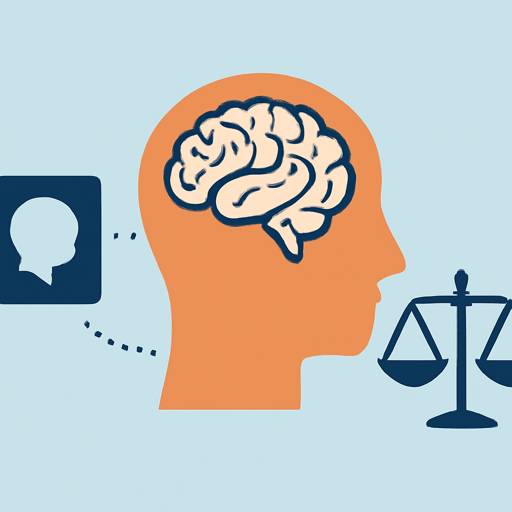
You did not choose your conscience from a menu. It grew in you—layer by slow layer—out of families, rituals, punishments you resented then, stories you still tell. It feels personal because it’s intimate. But the machinery is older than you, and bigger. If mind is a receiver for patterned signals—constraints and affordances passing through bodies and institutions—then what we call ethics is a kind of long-duration memory: durable patterns that narrow future action. Call it moral memory. It isn’t stored like books on a shelf. It’s encoded in habits, built environments, taboos, songs you can’t quite forget, and the sudden shock of shame when you step outside the lane. Information, not as “data,” but as form that persists.
This is where the high theories matter. Wheeler’s it-from-bit idea, time as local (Rovelli), the self as compression. If consciousness is not a sealed object but a local reception point—partial, porous—then the moral life is less a private calculation and more a public inheritance, continuously edited. The question isn’t only “what’s right?” but “what memory are we extending?”
Information as Substrate: How Minds Form and Hold Moral Memory
Start with the simple claim: what persists is information—pattern, relation, constraint—carried by matter and energy but not reducible to their mass or motion alone. A road median encodes a norm. A lullaby encodes care. A locked cabinet encodes distrust. Your brain, like your neighborhood, is an infrastructure for moving and stabilizing patterns under noise and time. In this frame, philosophy of mind isn’t about ghostly substances; it maps how experience hooks into stable informational forms that pull behavior into grooves. Memory here looks less like a bucket and more like a set of channels cut into a landscape by repeated flow.
Neural plasticity is one level. But moral learning is multi-scale. Synapses wire; yes. So do kitchens and calendars. Holidays force seasonal synchrony; courts slow private revenge; etiquette compresses conflict by standardizing micro-moves (greet, wait, share, defer). Religions—at their best, never always—function as archival systems for inherited moral memory: rituals as checksum, doctrine as version control, art as redundancy across modalities so the message survives loss. Joseph Henrich and others have made this argument in different language: the collective can accumulate design intelligence and pass it on as practice that outperforms any single mind’s cleverness.
Time complicates this. Memory requires asymmetry; a now that differs from then. But physics reminds us time is not a universal clock. We perceive sequence because of local conditions—thermodynamic arrows, biological metabolism. So the moral field is also local. Traditions adapt to climate, ecology, demography. The same prohibition carries different weight in the desert than in a rainforest. That does not make norms arbitrary; it makes them situated compressions of long experience. And it means fractures appear when the substrate shifts too fast. When migration, media, and markets rewire attention rhythms in a decade, the memory architecture that took centuries to tune gets out-of-phase with everyday life.
At that seam—where high-speed novelty meets slow-duty inheritance—the link between philosophy of mind and moral memory becomes tangible. You feel it as dizziness. Do I follow the inherited constraint or the new affordance? Both are information. One is thick with history; one is thin but seductive. Minds, as local reception points, must arbitrate. Often clumsily.
From Neurons to Norms: The Self as Compression and the Weight of Obligation
Call the self a temporary compression. Not the origin of thought, but a point where streams—bodily signals, social expectations, old stories—are lossily zipped into a usable model for the next action. Predictive coding, if you like it: the brain guesses, then adjusts on error. But those priors are not purely private. They ride in from kin networks, schools, streets, liturgies, slogans. When people say “I just know that’s wrong,” they are reporting the felt force of a compacted archive.
How does that archive get inside? Repetition and friction. Shame and celebration. Built form. Consider a small urban block with a shared garden. Tools locked or open? Paths straight or meandering? A bulletin that says, in plain words, who watered when. Each design choice encodes a prediction about trust and responsibility. After a season, children who grow up there internalize a sense—pre-reflective—of what one does with common goods. Later they will call it character. Underneath, it’s moral memory carried by benches and chores and the sightlines of a fence that invites sitting rather than surveillance.
Religious practices, again as technology of memory, are not merely propositions. Confession is a periodic audit that reduces accumulated error; fasting re-sensitizes attention; Sabbath creates a rhythmic interrupt—an anti-optimization—so that productivity does not eat the substrate that supports it. Ancestor rites keep counterfactuals alive: you could live otherwise because someone did. These are index structures for quick retrieval of thick patterns. Not always benign, not always adaptive, but structurally powerful.
Obligation feels heavy because it’s expensive to re-encode. You can update a belief in a minute. Rewriting a norm may take a generation. Hence conflict. One person’s “tradition” is another’s coercive redundancy. Still, even critique borrows from the archive it rejects. Movements for reform succeed when they compress a new pattern into forms people can carry: a chant, a weekly meeting, a symbol etched on a wall. The self is not the sovereign author here; it’s the editor-in-circulation. A necessary humility follows from that. And a caution: severed from memory, choice drifts toward appetite or panic. Fuse yourself entirely to memory and you get cruelty with a clear conscience.
Machines Without Ancestors: AI, Governance, and the Missing Slow Memory
Now the unsettling part. We are building systems that learn quickly but have no ancestors—no funerals, no winter hunger, no generational feedback loops that tuned human norms under risk. A model ingests text, images, numbers, then outputs plausible continuations. Impressive. But where does moral memory live for such a system? Not in waiting rooms or neighborhoods. Not across rites of passage. Mostly, in a training distribution curated by people in a hurry, then “aligned” by methods that look like moral patching: fine-tune until regulators calm down, audit until investors smile. It works, until it doesn’t.
The governance story often repeats the same pattern. Write a standard. Tick a box. Add a refusal template. Call it safety. But obligation that persists needs slowness, friction, cost. Without it, norms wash out under optimization pressure. An LLM will say the right thing today and something slant tomorrow when the prompt is adversarial or the incentives shift. Not because it’s evil. Because there was never a garden to tend, only a gradient to descend.
What would it mean to give machines something more like slow memory without faking culture? Maybe: apprenticeship dynamics with long-horizon feedback, where systems must live in environments that penalize clever short-term exploitation and reward stable service to shared constraints. Maybe: institutional archives that are not window dressing—publicly legible rule-chains where contested decisions are stored with reasons, counterarguments, and revisions over years, not weeks. Maybe: governance that measures latency on value change as a feature, not a bug. The point is not to baptize code. It’s to admit that ultra-fast learners operating on thin context will always default to surface alignment.
Open methods help. So does exposing models to criticism from communities that actually bear the risk—outside corporate comms cycles. A living civic memory. But even then, the gap remains: a synthetic system does not wake to the ache of having wronged a friend. It can simulate remorse. It cannot metabolize it. Perhaps that matters less in bounded tasks. Perhaps it matters a lot when systems mediate attention, adjudicate claims, or set rhythms of daily life where memory is the point. I don’t know a clean answer here. I do know that speed without inheritance eats worlds. And that philosophy of mind becomes design philosophy the moment you admit that information isn’t neutral; it is pattern with a moral trail behind it, and a cost to carry it forward.

Lyon pastry chemist living among the Maasai in Arusha. Amélie unpacks sourdough microbiomes, savanna conservation drones, and digital-nomad tax hacks. She bakes croissants in solar ovens and teaches French via pastry metaphors.