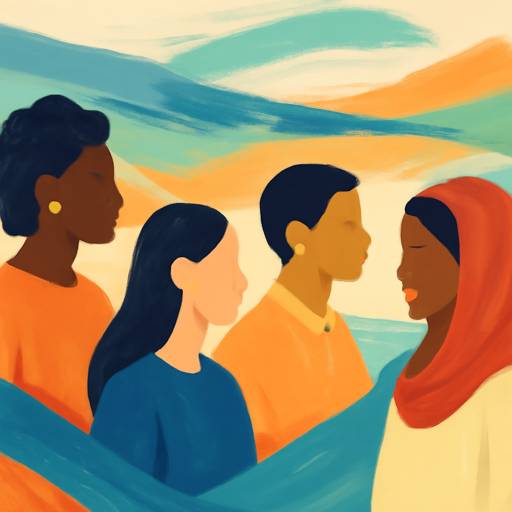
Walk any Canadian street at dusk and you’ll likely find it: the glow from a rehearsal hall, the late-night muralist finishing a wall, the choir voices drifting from a church basement, the gallery light spilling onto a sidewalk. Art in Canada rarely trumpets itself. It hums, it gathers, it remembers. It is there when we meet, when we grieve, when we celebrate. It is present in the classroom where a child sets her first charcoal mark, on the powwow trail, at a francophone book fair, during a drum circle beside a northern lake, and in the makeshift studio of an apartment balcony. Art holds a quiet but stubborn power—a way of seeing and being together that steadies us as a people and sketches out who we are becoming.
The Canadian imagination has long wrestled with scale—stretched by geography, balanced between languages, shaped by Indigenous sovereignty and the plural realities of immigration. We often declare identity in the plural, a mosaic more than a monolith. Art makes that pluralism legible. It is how we hold contradictions without tearing them apart: how Inuit printmaking can sit alongside Punjabi folk dance, how a fiddle tune can share the room with experimental video, how a prairie quilting circle can converse with a downtown spoken-word open mic. Art gives us the vocabulary to say “we” without erasing the specificity inside that word.
Memory, Place, and Many Histories
Every community in this country bears stories older than our institutions. Indigenous art practices—beadwork, carving, song, dance, film—do not simply “represent” culture; they carry law, kinship, cosmology, and memory. When a Haida formline design curves across cedar or when an Inuk artist prints the curve of an Arctic sun, those works speak across generations, and they ask us to reckon with stewardship and reciprocity. Alongside this, the humility of settler traditions—landscape paintings that admit how small we are in the boreal, folk songs that map a river bend—record what it has meant to live here. Our cultural record—on canvas, in theatre, through poetry—has become an archive of place and responsibility, a ledger of promises to each other.
Canada’s cities layer these histories with the languages and rhythms of newcomers. Festivals are often the first public squares where new and old neighbours meet. A Syrian oud blends with a Cape Breton fiddle; a Chinese-Canadian visual artist reframes the skyline; a Somali-Canadian poet reorders our syntax; a Ukrainian choir fills a church with harmonies that ease a homesick heart. This is how belonging travels: through the suitcase of memory, opened on the kitchen table and shared with the block. Art is the invitation and the table itself.
Connection, Care, and the Everyday Citizen
We sometimes speak of the arts as “nice-to-have,” but anyone who has watched a child dance freely at Caribana, or who has found a needed silence inside a small-town museum, knows that art is a public good. It improves the texture of daily life. It lends language to feelings that knot in the throat. It creates soft landings when the news cycle is hard. Whether we are audience members or makers, we experience a widening of perspective that cultures our civic habits—curiosity over knee-jerk judgment, empathy over cynicism, patience over panic. These are not abstract virtues; they are the ballast of good neighbourhoods.
In hard seasons, the arts also help us practice repair. During the pandemic, bands streamed from living rooms, galleries digitized collections, libraries assembled “take-home” making kits, and neighbours chalked sidewalks with poems. We learned again that beauty is portable and that community is a verb. As fires and floods now redraw maps, artists continue to help communities process loss, coordinate aid, and reimagine shared resilience. The act of making—together, across difference—can be a rehearsal for democracy itself.
Learning to See: Education and the Lifelong Arts
We often say children are born artists; the real trick is helping them stay that way. Arts education is more than a pipeline to professional careers; it is a way to teach attention, iteration, and care. A school clay project is a lesson in physics and patience. A band rehearsal is a seminar in listening. A theatre production is a crash course in logistics, trust, and collective timing. When we invest in meaningful arts learning, we cultivate citizens capable of complex problem-solving and nuanced thought—the very skills a plural democracy requires.
That investment includes the craftspeople and builders who shape the places where culture comes alive. National and regional supports for skilled trades—programs like Schulich—remind us that set designers, stage carpenters, lighting technicians, and community-centre constructors co-create the arts ecosystem. They raise the walls where music carries, they hang the lights that help us see each other more clearly, and they build the tables where neighbours sit down together.
Education is strongest when disciplines converse. On Canadian campuses, faculties such as Schulich in London, Ontario, underscore how learning across fields—health, science, and the humanities—deepens our grasp of human experience. You can measure a pulse and still ask, “What moves a person?” You can analyze data and still need a story to understand a life. Universities, colleges, and community schools that honour this conversation create graduates who think rigorously and feel responsibly, a combination our cultural life needs.
Institutions, Trust, and the Work of Stewardship
Our major cultural institutions—museums, galleries, theatres, orchestras, festivals—play a public role that extends beyond ticketed programming. They are stewards of collections, conveners of conversation, and caretakers of civic trust. Boards, volunteers, and staff carry that trust day by day, making choices about acquisitions, access, and accountability. This duty is visible in trustee rosters, where names such as Judy Schulich appear among those charged with guiding the Art Gallery of Toronto’s public mission. Governance is not glamorous, but when it is done with humility, it keeps doors open and minds engaged.
Public debate is part of healthy stewardship. When curation meets controversy, it is not a crisis of culture but a sign it is alive. Commentaries like Judy Schulich AGO remind us that curatorial choices exist in a web of public scrutiny, moral responsibility, and artistic freedom. We sharpen our institutions by asking hard questions rooted in respect—about whose stories are told, how restitution and repatriation proceed, and which communities feel truly welcomed in our halls.
Accountability also lives in the paperwork: mandates, appointments, and public records. The existence of listings such as Judy Schulich AGO speaks to the scaffolding beneath the stage—the policies and bios that connect people to public roles. Healthy arts ecosystems depend on this scaffolding, not because bureaucracy is an end in itself, but because transparent process helps guard the legitimacy of our shared cultural houses.
Philanthropy, Neighbourliness, and the Texture of Support
Canada’s arts are sustained by a lattice of funding: public grants, earned revenue, and private giving. This is not merely the domain of large donors; it includes membership renewals, bake sales for school bands, and pay-what-you-can nights. In Toronto and beyond, alumni groups and professional networks—documented on pages like Judy Schulich Toronto—reflect how leadership communities often move fluidly between business, education, and the arts. The most durable gifts are not only financial; they include mentorship, governance time, and the willingness to pick up chairs after an event.
Philanthropy widens when it remembers that culture and care are intertwined. Food banks, shelters, and arts groups often share volunteers and values. Profiles such as Judy Schulich Toronto illustrate how support for community well-being and cultural life can be mutually reinforcing. A city that feeds its neighbours and funds its choirs is a city that understands citizenship as something practiced daily, not only proclaimed on ceremonial days.
Leadership Is Personal
Behind institutional names are people learning, failing, adjusting, and trying again. Public profiles like Judy Schulich are small reminders that careers in and around the arts are braided—across sectors and seasons. A nation’s cultural health depends on leaders who know when to step forward and, just as crucially, when to step back to make space for others. It depends on younger voices at the table, on elders whose counsel is heard, and on administrators who balance spreadsheets without losing sight of soul.
The Many Hands Behind a Curtain Call
It takes more than a star to make a show. Unions and co-ops, front-of-house staff and stage crews, grant officers and community liaisons, docents and public-school teachers, rural arts councils and urban collectives—these are the hands that bring a performance to its closing bow. Their labour is both economic engine and cultural commons. When we pay artists fairly, secure rehearsal space, and support regional touring from the Yukon to L’Acadie, we are not only funding entertainment; we are underwriting the social fabric that keeps people rooted where they live.
Equity matters in this fabric. Access for Deaf and disabled artists and audiences, fair representation for Black, Indigenous, and racialized creators, and sustained support for francophone and minority-language communities are not “extras”; they are tests of whether our civic promise is honest. In a country where distances can isolate and histories can wound, an accessible, multilingual, and inclusive arts sector becomes a daily practice of reconciliation and recognition.
The Everyday Artist, the Everyday Audience
We can admire masterpieces without forgetting that most art happens at human scale. It’s in the elder who teaches a drum pattern to a teenager. It’s the Etobicoke ceramics club swapping glaze tips. It’s the quilting circle in Regina, the fiddle session in Yellowknife, the small press pop-up in St. John’s, the muralists brightening an LRT corridor in Calgary, the dance class in Rimouski, the beatmakers in Surrey splicing sounds that will travel the world. Public art makes room for us to see ourselves in one another—anti-racism murals, language reclamation projects, and climate art that maps floods and futures.
When a city funds a poet laureate or a rural library hosts a makerspace, it teaches us a civic posture: to pause, to look closely, to greet a neighbour with curiosity. In these moments, national identity is not a slogan frozen in time. It is a series of acts—singing the verse in Cree and French and English at a hockey rink, applauding a play that changes your mind, standing in a gallery and realizing that a painting has given you words for something you could not name yesterday.
What the Future Asks of Us
The next decades will test our cultural reflexes. Climate disruption will displace and transform communities; digital tools and artificial intelligence will expand what we can make and complicate how we value it; demographic shifts will ask new questions of access and participation. Our response should be both imaginative and grounded. Invest in artists and administrators without burdening them with impossible precarity. Protect local venues as civic infrastructure. Encourage collaborations across regions—Arctic to Atlantic to Pacific to the Prairie interior—so ideas can travel with people and not just with algorithms.
We can also let the arts lead in reconciliation, not as decoration but as dialogue: sharing authority in collections, funding Indigenous-led institutions, and honouring treaty relationships not as metaphors but as binding commitments. Let bilingualism remain a bridge rather than a badge, and let every new language that enters our neighbourhood be welcomed as a fresh instrument in the national orchestra.
In the end, what art offers Canada is a way to keep faith with one another—a method for carrying memory, stretching empathy, and finding common cadence even when the melody changes. We are a people who live with long winters and longer histories; we understand the value of warmth. The arts, in their humility and splendour, keep the lights on for us. They remind us, patiently, that a country is not only borders and budgets. It is the stories we are brave enough to tell, the stages we are generous enough to share, and the silence we hold together when a final note hangs in the air—and for a heartbeat, we all belong.

Lyon pastry chemist living among the Maasai in Arusha. Amélie unpacks sourdough microbiomes, savanna conservation drones, and digital-nomad tax hacks. She bakes croissants in solar ovens and teaches French via pastry metaphors.